Tilez™ - Fun Family Game
- 4.6
- Rating
- 50.00K
- Installs
- Free
- Price
 Analysis by App-foxy
I went into Tilez™ - Fun Family Game expecting a light board game for short breaks, and that is exactly where it makes the most sense. It is a free title from Beach Bum Ltd. built around arranging and matching tiles, with a simple enough presentation for a broad audience but enough room for careful play. I found it easy to understand quickly, yet not so automatic that every round felt identical.
The important distinction is that this is not trying to replace a long strategy board game or a social tabletop session. Its appeal comes from compact decisions: looking at the available tiles, spotting useful combinations, and deciding whether to take an obvious move now or preserve flexibility for later. That makes it suitable for a quiet few minutes on a phone, especially when I want something more involving than passive scrolling but less demanding than a competitive multiplayer game.
It is listed as a free game in the board category, with an Everyone age rating. The current version is 2.27.602 and it runs on Android 5.0 or later. Those details make it accessible to people using older devices, although the actual experience will still depend on the phone’s screen size and general condition. The game has reached over fifty thousand installs and holds a 4.6 average from more than five hundred ratings, which suggests that its straightforward format is connecting with a solid audience.
You May Also Like

 Blood Strike: 2.5 Anniversary
Blood Strike’s Loadouts Turn Every Drop Into a Tactical Gamble
A close look at Blood Strike’s custom loadouts: how fast access to signature weapons reshapes its battle royale rhythm, rewards preparation, and narrows the gap between fights.

 Pandora - Music & Podcasts
Pandora’s Music Is Easy to Start, but Harder to Recover
Pandora’s strength is its low-effort path from a seed to a station. Its weak spot is how much confidence it asks you to place in connection, setup, and quiet recovery.

 8 Ball Pool
 Is Built on Rivalries, Rematches, and Routine
A close look at the rivalries, rematches, shared routines, and unanswered safety questions that turn a quick pool match into a persistent mobile community.

 Samsung Music
’s Quiet Strength Is Playing What You Already Own
Its reach comes less from spectacle than from dependable access to a personal library. That simplicity is both the app’s strongest retention engine and its ceiling.

 AccuWeather: Weather Radar
AccuWeather Review: A Quick, Clear Forecast for Everyday Decisions
For everyday plans, the best forecast is the one you can understand quickly. AccuWeather makes rain timing, radar, and local conditions easy to act on, with a few trade-offs.

 Hill Climb Racing
Why Hill Climb Racing Still Turns Crashes Into One More Run
A tiny car, a bumpy hill and one more upgrade: Hill Climb Racing keeps resurfacing because its simple chaos makes every near-miss feel personal.
More From Our News Desk
View All News


How the first goals shape the opening minutes
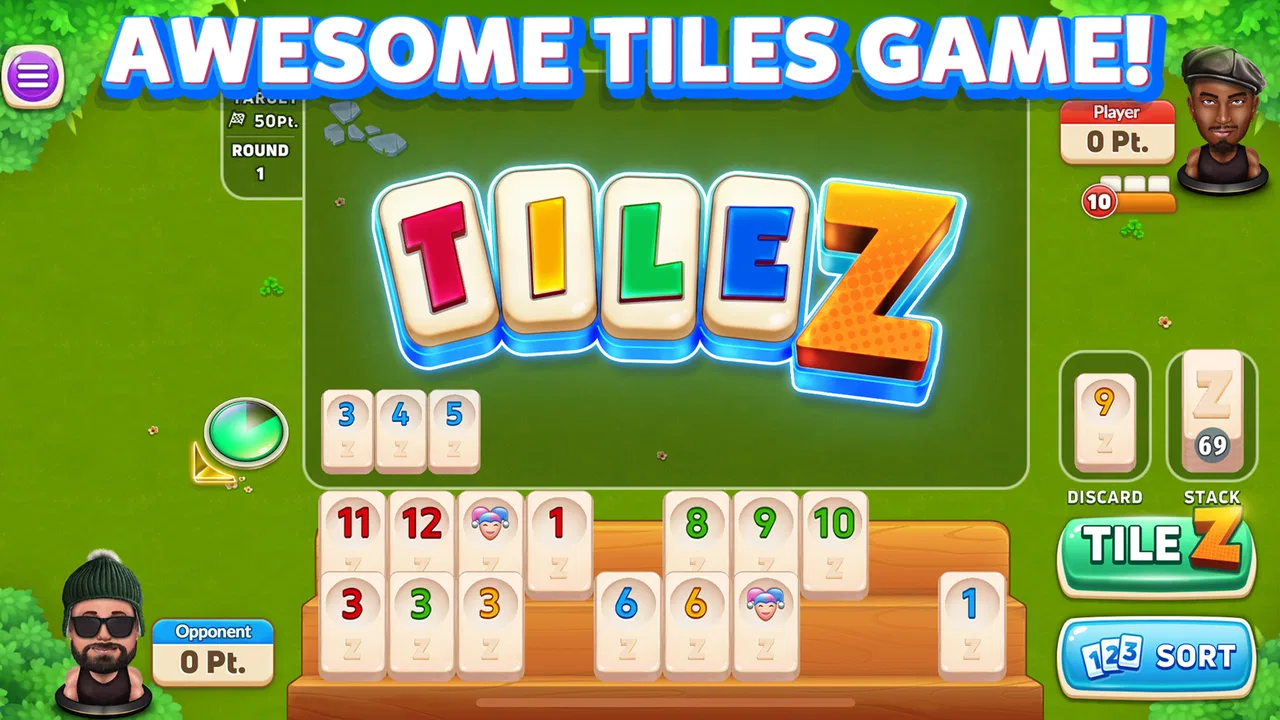
The early appeal comes from having a goal that is immediately readable. I do not need to study a long rulebook before making a first move. The tile-based format communicates its own priorities through the board: identify what can be combined, avoid wasting useful spaces, and keep enough options available for the next turn. That clarity is valuable for family play because a new player can begin by observing rather than memorizing complicated exceptions.
My preferred way to approach the opening is to resist clearing the first attractive group I notice. Instead, I look across the whole layout and ask which move leaves the most useful follow-up choices. This small habit changes the game from simple tapping into a compact planning exercise. It is also one of the first signs that the title has more depth than its cheerful, casual presentation suggests.
For younger or less experienced players, the early objective is simply learning how the board responds to each selection. For a more practiced player, the objective becomes preserving structure. A move that looks efficient can sometimes create an awkward remainder, while a less obvious choice may keep several routes open. That difference gives the opening phase a gentle learning curve without making the game feel like a lesson.
There is also a useful everyday scenario here. If I have a short wait before an appointment, I can start a session without needing to remember a complicated story or reconnect with a large world. The game gets to the decision quickly, and I can focus on the board rather than managing a character, inventory, or a large collection of menus. That immediacy is one of its strongest practical qualities.
What to watch before making a move
A good beginner habit is to scan from the edges toward the center instead of focusing only on the most visible cluster. Tile arrangements can make one option look urgent when another move has greater value because it opens space or protects a future combination. I also found it helpful to pause for a moment after each successful action. The next best move is not always the one nearest to the last one.
This is a small but meaningful distinction from many match-style mobile games, where speed and repeated reactions dominate. Here, patience has a clearer role. The game feels better when I treat each board as a puzzle to read rather than a sequence of targets to remove as quickly as possible.
That said, people looking for a deep tabletop simulation may find the initial goals too modest. There is no need to build a long-term strategy around diplomacy, resource economies, or a changing campaign map. The early game is about local decisions, and that is both its strength and its boundary.
Progress signals that make repeated rounds worthwhile
Tilez works best when progress is felt through improving judgment rather than through a complicated narrative. I notice progress when I stop making the first available move, recognize patterns sooner, and finish a board with fewer awkward leftovers. Those are satisfying signals because they come directly from my decisions. Even without turning every session into a serious challenge, the game gives me a reason to try again: I can usually see where a more careful choice might have helped.
This kind of progress is especially suitable for players who enjoy puzzle repetition. The motivation is not necessarily to reach a dramatic story milestone. It is the quieter satisfaction of becoming more efficient and more deliberate. I appreciate that because it keeps the focus on the board itself instead of surrounding the core activity with excessive decoration.
The title’s family-friendly positioning also matters. With an Everyone rating, it is easier to imagine sharing the basic rules with a child, a parent, or someone who rarely plays mobile games. I would still explain the idea in my own words rather than assuming every player will understand the best tactics immediately. The rules may be approachable, but choosing well is something that improves through practice.
One useful way to make progress visible is to set a personal rule for a session. I might focus on leaving more open possibilities, avoiding rushed selections, or trying to solve a board with a particular kind of restraint. These self-imposed targets work well because the game’s compact format does not require a large external reward system to remain interesting. They turn familiar rounds into small experiments.
Why the board itself is the main reward
In many mobile board games, progression can feel disconnected from play when the most noticeable rewards come from collecting items or unlocking presentation changes. Tilez has a more direct appeal: the board asks a question, and my answer determines how cleanly the round develops. That connection makes a successful sequence feel earned.
The trade-off is that players who need constant novelty may lose interest sooner. If your ideal game introduces new characters, dramatic missions, or a large stream of content, this compact tile format may appear restrained. I see it as a better match for someone who enjoys refining a familiar activity than for someone who wants a constantly changing adventure.
I also recommend playing with the sound and visual pace that feels comfortable rather than treating every round as a race. The strongest progress signal is understanding why a move worked. Rushing can produce a result, but slowing down occasionally teaches more about the board’s structure and makes later decisions easier.
Difficulty and pacing: where the challenge feels fair
The difficulty is most enjoyable when it comes from limited options rather than confusing rules. I can understand what I am trying to do, but the board may not offer a perfect sequence. That creates the central tension: do I take a safe combination, or do I wait for a better arrangement while risking a less flexible position? It is a familiar puzzle trade-off, yet it remains effective because each board makes me reassess the balance.
The pacing suits short sessions. I do not need to reserve a large block of time, and the game does not demand the attention of a full-length strategy title. This makes it a good companion for a commute, a coffee break, or a few minutes at home when I want a low-pressure mental reset. I would not choose it for an evening when I want a rich campaign, but I often prefer its modest commitment when I am tired.
As my decisions improve, the challenge becomes less about learning the rules and more about avoiding self-created problems. That is a healthy form of difficulty because it rewards observation. A poor result usually gives me something to consider: perhaps I removed a useful tile too early, concentrated on one area, or failed to think about the next available move.
The pacing can feel less satisfying if I want a strong sense of escalation within every session. Tile-based play naturally repeats its basic rhythm, so the excitement depends on how much I enjoy examining small differences between boards. I would describe the challenge as thoughtful rather than dramatic. It asks for attention, but it does not attempt to overwhelm me with pressure.
When the difficulty becomes a limitation
Players who prefer direct competition should approach with the right expectations. This is not the same experience as sitting across from another person in a traditional board game, where bluffing, negotiation, and reacting to an opponent create tension. The challenge here is primarily against the arrangement and against my own habits.
It is also not the best choice for someone seeking a completely passive game. Although the controls are easy to grasp, good results require looking ahead. I can play casually, but I cannot expect the most satisfying outcomes if I tap without considering what the remaining board may become.
My practical tip is to separate mistakes into two groups. If I misunderstood the available move, I need to slow down and scan more carefully. If I understood it but chose poorly, I should focus on preserving future options. This distinction prevents frustration and makes practice more useful than simply replaying without reflection.
Retention pressure, free access, and the cost of convenience
The free entry point is a clear advantage. I can try the game without committing money first, which is exactly what I want from a small board title. The presence of in-app purchases, ranging from $0.99 to $379.99 per item, means I would pay attention to the purchase prompts and decide in advance whether I want to spend anything. The broad range makes it especially important not to treat optional spending as part of the basic value calculation.
For me, the healthiest way to use a free game like this is to judge the core play before considering extras. If the simple act of reading the board and making better choices is already enjoyable, the game has done its job without needing additional purchases. If I only feel motivated when a prompt suggests a shortcut or reward, that is a sign to step back and ask whether the underlying loop is enough.
The retention pressure comes mainly from the possibility of improving a result and trying one more board. That can be pleasant because the loop is compact, but it can also encourage longer sessions than planned. I recommend setting a stopping point before opening the game if I am using it during a busy day. A short puzzle can easily become a chain of “just one more” attempts, particularly after a near-successful round.
This is where the game compares interestingly with usual alternatives. A traditional physical tile game offers tactile pieces and face-to-face conversation, but it requires setup and another player. A larger digital board game may provide more rules, campaigns, and strategic variety, but it also asks for more time and attention. Tilez sits between those options: more interactive than a passive casual app, less involved than a full tabletop adaptation.
Compared with typical match-three games, it feels less dependent on rapid visual effects and more dependent on planning. Compared with classic solitaire-style apps, it offers a tile-centered structure that can feel more deliberate than simply moving cards into familiar foundations. Neither comparison makes it universally better; it simply clarifies who will enjoy it. I would choose this when I want a calm puzzle with visible choices, not when I want spectacle or a long competitive session.
Who should use it, and who should skip it
I would recommend it to families looking for an approachable board-style game, casual puzzle players who enjoy improving through repetition, and adults who want a compact activity during breaks. It is also a reasonable option for someone introducing a less experienced player to mobile games because the central interaction is easier to explain than a large strategy system.
I would skip it if my priority were online rivalry, a substantial story, deep deck construction, or a campaign with a strong sense of place. I would also be cautious if I dislike in-app purchase prompts in free games, even when I intend not to buy anything. The game’s value depends on enjoying its central tile decisions, so anyone who needs a constant stream of new mechanics may find the format too focused.
Device compatibility is relatively welcoming because the minimum requirement is Android 5.0, but I would still prefer a screen that gives me enough room to inspect the board comfortably. On a small or older phone, tile recognition and tapping precision may feel less relaxed, especially when I am trying to compare several possible moves. That is not a reason to reject it outright, but it is worth considering before choosing it as a main puzzle game.
My verdict on the progression and long-term appeal
My overall impression is that Tilez succeeds by keeping its promise small and clear. It gives me a board to read, choices to weigh, and a reason to replay when I believe I can make a cleaner decision. The early goals are accessible, the progress signals come from improved skill, and the difficulty is most rewarding when I take time to plan instead of tapping automatically.
The progression is not built for players who need a dramatic unlock path or a constantly expanding world. Its strength is the gradual refinement of play: I become better at recognizing useful arrangements and protecting future options. That can sustain regular short sessions, but it will not satisfy everyone. The game is at its best when I want a focused puzzle, not a substitute for a full board-game night.
Beach Bum Ltd. has positioned this as a family-friendly board game, and that description fits my experience. The Everyone rating, free starting point, and simple tile interaction make it easy to recommend as a low-barrier download. At the same time, the in-app purchase range means I would keep spending decisions separate from the basic gameplay and avoid treating optional items as necessary for enjoyment.
After playing, I would recommend giving it a fair trial with one deliberate change in approach: do not chase the first obvious combination. Scan the whole board, preserve flexibility, and treat each round as a small planning problem. If that style of play sounds satisfying, this is a pleasantly accessible choice. If I want social competition, a deep campaign, or fast arcade energy, I would choose a different board or puzzle experience instead.
My final recommendation: Tilez is worth trying for anyone who wants a free, approachable tile game with a calm rhythm and room to sharpen decision-making. Its appeal is focused rather than expansive, and that focus is exactly why it works for short, repeatable sessions.
FAQs for Tilez™ - Fun Family Game
01What is Tilez™ - Fun Family Game?
Tilez™ - Fun Family Game is a casual tile-matching puzzle designed for relaxed, family-friendly play. The main objective is to arrange or match tiles according to the rules of each challenge, gradually clearing the board and earning progress. Its simple controls make it approachable for younger players, while the increasing difficulty can still provide an enjoyable challenge for adults.
02Is Tilez™ suitable for children and family play?
The game is presented as a family-oriented experience, with easy-to-understand mechanics that do not require advanced gaming skills. Children can generally learn the basics quickly, while parents and older players may enjoy competing for better scores or completing more difficult stages. Parents should still review the app’s age rating, advertising settings, and any in-app purchase options before allowing children to play.
03Does Tilez™ - Fun Family Game require an internet connection?
Whether an internet connection is needed can depend on the version installed and the features you use. Basic puzzle gameplay may be available offline, but advertisements, updates, cloud-related features, leaderboards, or other online services may require access to the internet. If you plan to play while traveling or with limited data, test the installed version offline first rather than assuming every feature will work.
04Is Tilez™ free to download, and does it include purchases or advertisements?
Tilez™ - Fun Family Game may be offered as a free download, but free access does not always mean that every feature is completely free. Many casual games support development through advertisements, optional purchases, extra lives, boosters, or other digital items. Check the official Google Play or App Store listing for the current pricing, in-app purchase information, and subscription details before downloading.
05What devices are compatible with Tilez™ - Fun Family Game?
Compatibility depends on the operating system, device model, available storage, and the minimum software version required by the current release. Before installing, open the official store page on your Android phone, iPhone, or tablet to confirm that the app is supported. Keeping your operating system updated and ensuring sufficient free storage can also help prevent installation problems or performance issues.
Pros
- Simple matching rules make it easy for children and adults to learn.
- Short rounds work well for quick play sessions.
- Colorful tile designs make the board easy to read.
- Family-friendly gameplay is suitable for playing together.
- Progressive challenges help keep the experience engaging.
Cons
- Some levels may feel repetitive after extended play.
- Difficulty can vary noticeably between stages.
- Mistakes may be frustrating for younger players.
- Requires concentration
- which may not suit casual multitasking.
- Limited variety may reduce long-term appeal for experienced players.

Tilez™ - Fun Family Game
Gallery